
In today’s rapidly evolving healthcare landscape, organizations are increasingly adopting cloud-based SaaS Enterprise Resource Planning (ERP) platforms to enhance operational efficiency, streamline processes, and foster innovation. The global cloud ERP market size is projected to reach $130 Bn by 20271, driven by surge in adoption of cloud-based solutions and services. However, the transition to a fully integrated Cloud ERP environment presents significant challenges. Many healthcare providers grapple with a hybrid infrastructure, balancing legacy systems alongside modern cloud solutions. This coexistence can lead to workflow disruptions, data silos, and integration complexities, hindering the seamless operation of critical functions. Moreover, aligning diverse business processes with new cloud frameworks demands meticulous planning and adaptation. Without standardized workflows, the full potential of the Cloud ERP systems remains untapped, resulting in inefficiencies and missed opportunities for improvement.
To fully leverage their Cloud ERP investments, healthcare organizations must commit to continuous modernization and optimization and drive value. This involves not only migrating to a cloud platform but also a strategic shift to embrace continuous innovation to meet the demands of a digital, data-driven industry. Healthcare providers can transform their Cloud ERP systems into powerful tools that drive operational excellence, support growth, and deliver actionable insights, while maximizing return on investment and ensuring resilience in an ever-changing healthcare environment.
Strategic Shift Towards Driving Value with ERP
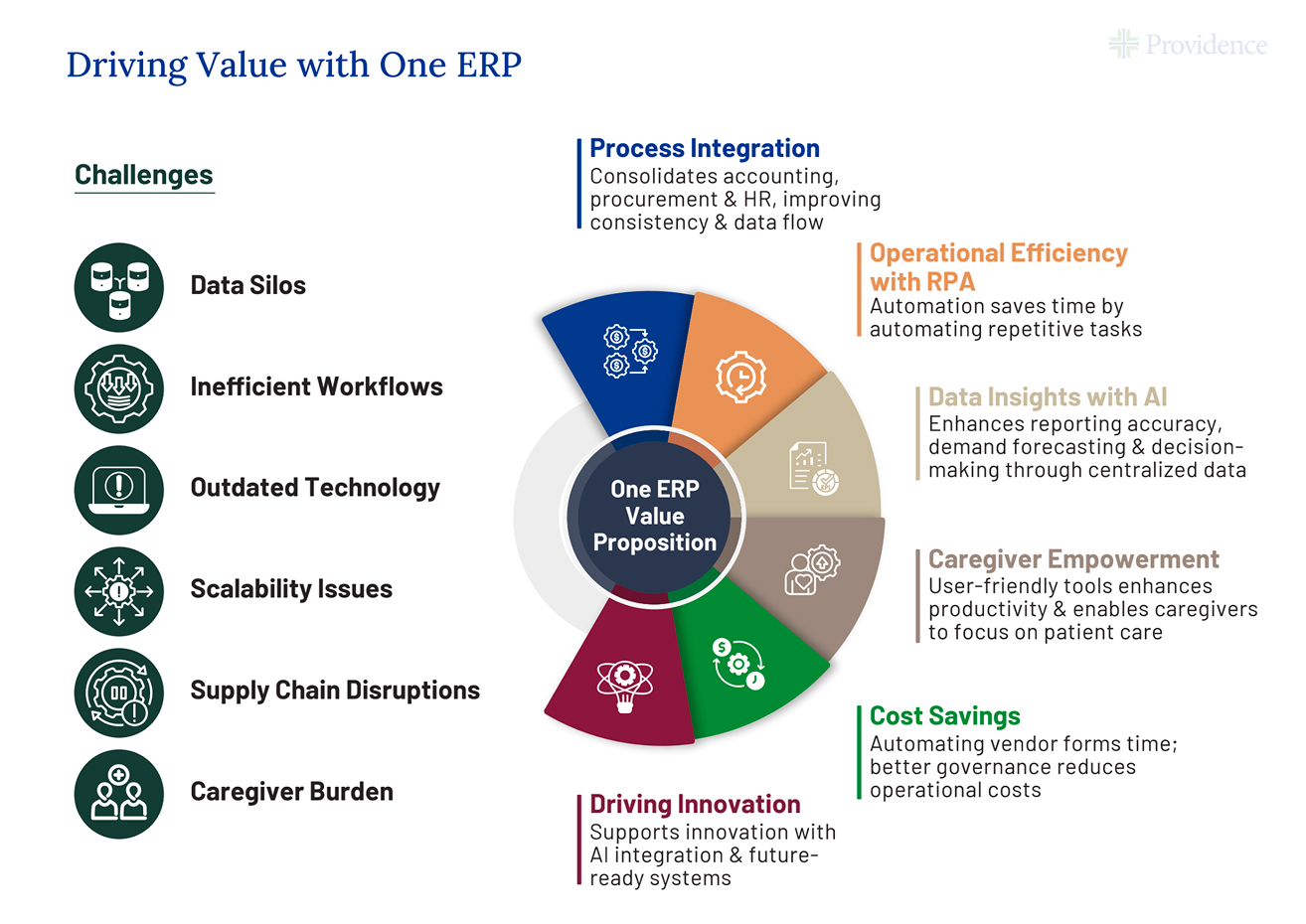
Beyond the Launch: Addressing the Complications of Post-Cloud ERP Implementation
While a single consolidated cloud ERP platform brings an immediate improvement in business operations, the true value lies in the ability to evolve after the implementation. Cloud migrations have been there for quite some time and organizations acknowledge the need to transition to cloud. However, large organizations still face considerable challenges in driving value from their investments. This stems from the lack of a stable operating model for Cloud ERP support and focused innovation mindset after the ERP implementation.
Inconsistent Processes Hinders Adoption: As part of ERP implementations, process standardization takes a back seat in lieu of meeting scope and schedule goals. This leads to inefficiencies with inconsistent workflows, integration becomes cumbersome, and enterprise systems like ERP cannot deliver optimal value, even with the state-of-the art ERP applications. For example, a healthcare provider rolling out an ERP system might struggle if each regional office manages procurement, patient data reporting, or inventory differently. These discrepancies can delay system adoption, inflate costs, and complicate expansion into new regions.
Operational Inefficiency Impacts Scalability: Cloud-based ERP applications have the inherent ability to scale across and beyond your enterprise, over multiple business functions. But the ERP applications managed with inefficient Support Operations and lagging in the overall technical ecosystem, hinders the growth potential of the ERP, limiting the value that might been possibly leveraged.
Lack of Data Insights: Focus of ERP applications is to create the right business processes across the enterprise, integrating with the key applications and enabling the stakeholders to follow the business process. But organizations tend to ignore the biggest value driver from ERP, which is the ability to get the right insights at enterprise level and provide forecasts/trends that the executives could leverage. This leads to having multiple stakeholders building their own reporting solutions with the ERP data, leading to chaos and expensive infrastructure.
Lack of continuous innovation hurts user experience: In healthcare, caregiver experience is critical to both employee engagement and patient outcomes. A static ERP with complicated / confusing workflows and manual tasks can cause frustration and burnout among caregivers, leading to higher turnover rates and a less engaged workforce. As a result, providers incur higher recruitment and training costs. For instance, if nurses spend more time repeatedly entering the same data into multiple systems instead of caring for patients, it reduces productivity and affects patient care.
Driving Value by Unlocking the Full Potential of ERP by leveraging AI technologies
To leverage the full potential of an ERP system, organizations must implement a holistic approach that focuses on modernization, optimization, insightful data usage, and continuous innovation. Each of these areas plays a critical role in transforming operations and ensuring long-term sustainability and success.
Modernization of Operational Processes
Modernizing systems with a unified and AI based ERP platform transforms healthcare operations by addressing current inefficiencies. ERP streamlines workforce scheduling, ensuring caregivers are allocated effectively, workloads are balanced, and real-time data insights drive decisions. It integrates fragmented systems across departments and entities, creating a seamless flow of information, reducing duplication, and improving coordination. Financial and operational processes such as budgeting, forecasting, and procurement are simplified, enabling accurate financial planning and optimized resource management. By automating manual tasks using advanced AI based technologies including shift swaps and leave requests through self-service capabilities, caregivers can manage their schedules independently, saving valuable administrative time and enhancing engagement.
ERP lays the groundwork for scaling healthcare operations to meet future demands. Advanced analytics re-engineer workflows, reduce inefficiencies, and cut costs, while integrated supply chain management ensures timely availability of supplies and minimizes errors. Self-service tools in areas like talent management, scheduling, and procurement promote autonomy and improve workforce satisfaction. For example, automating processes like onboarding or expense approvals reduces delays, enabling staff to focus on delivering care.
Optimization: Enhancing Efficiency and Simplifying Operations
Optimization plays a vital role in maximizing the value of existing systems. Once foundational systems are in place, healthcare organizations must focus on eliminating inefficiencies and reducing complexity in everyday operations. Automating routine tasks through AI is a key component of this process, allowing staff to focus on higher-value activities that directly impact patient outcomes. For example, hospitals can save over 50,000 man-hours through various RPA implementations2.
Reducing technical debt is another ongoing priority. As healthcare organizations move to cloud-based systems, it is essential to eliminate outdated applications that hinder performance and increase maintenance costs. By reducing these burdens, organizations can achieve a more agile and efficient IT infrastructure that supports both short-term operational goals and long-term growth.
Furthermore, optimization efforts must extend to release management, ensuring faster updates and seamless integrations to avoid disruptions. Operational cost reductions can also be achieved by consolidating third-party vendors, improving vendor footprint management, and streamlining contract negotiations. Integration management ensures that all systems work together harmoniously, eliminating silos and improving workflow across departments. For instance, streamlined software updates in the ERP platform helps avoid disruptions in patient billing and ensure the latest features are implemented smoothly.
Insights: Empowering Data-Driven Decision Making
In an increasingly data-driven healthcare environment, gaining actionable insights from ERP systems is paramount. A robust ERP system not only centralizes healthcare data but also provides real-time access to critical information, enabling informed decision-making across the organization.
Real-time reporting allows healthcare providers to instantly view key performance indicators, such as patient care outcomes, resource utilization, and operational efficiencies. This visibility helps leaders to proactively address challenges, such as supply chain disruptions or patient flow issues, ensuring continuity of care. Consolidating data into a single platform further enhances collaboration and decision-making, as all departments work from the same source of truth, reducing confusion and miscommunication. Moreover, self-service reporting tools empower business units to generate their own insights, fostering a culture of data-driven decision-making. For example, hospitals use ERP dashboards to monitor real-time patient flow, identify bottlenecks in emergency departments and reallocating resources to improve waiting times.
Innovation: Leveraging Emerging Technologies to Drive Growth
To stay competitive and drive growth, healthcare organizations must embrace innovation by integrating advanced technologies like artificial intelligence (AI) and robotic process automation (RPA) into ERP systems. AI can optimize talent management, streamline recruitment, reduce bias, and ensure efficient caregiver scheduling, while also supporting personalized patient care through tailored data-driven care plans. RPA automates administrative tasks such as payroll and billing, reducing staff burden and allowing more focus on patient care.
High-volume integrations ensure systems manage increasing data and transaction volumes, minimizing errors and improving accuracy. AI agents assist with decision-making by automating routine tasks and providing timely insights, enhancing operational agility. Staying ahead of technological trends like cloud computing, machine learning, and data analytics enables organizations to meet evolving care needs and regulatory requirements, positioning them for success in a dynamic healthcare landscape. For instance, RPA streamlined the claims processing system, reducing billing errors and accelerating reimbursements by 40%.
The journey to fully realizing the benefits of an ERP system does not end with implementation. Organizations must embrace a mindset of continuous improvement, focusing on modernization, innovation, and value creation. By modernizing legacy systems, integrating emerging technologies like AI and RPA, and continuously optimizing business processes, organizations can unlock the true potential of their ERP system. The result is not just operational efficiency but also the ability to drive faster decision-making, reduce administrative burden, and stay ahead of the competition. Through continuous improvement, organizations can ensure their ERP systems remain agile, innovative, and capable of meeting future challenges.