In the demanding world of healthcare, caregivers (healthcare workers) are the heart and soul of patient care. They dedicate themselves to improving lives, facing challenges and delivering vital and sometimes, life-saving services. In the U.S. healthcare system, caregiver health screenings are critical regulatory requirements aimed at maintaining both patient and caregiver safety. These screenings vary by state and healthcare setting and pose several challenges, due to which, there is a pressing need for healthcare organizations to effectively manage caregiver health. These regulatory health screenings, while essential, introduce several practical and emotional challenges for caregivers, and can become an ongoing source of stress, impacting caregiver satisfaction and, ultimately, their ability to provide quality patient care.
Most hospitals do not have a robust support system managing caregiver health, with traditional methods having complex processes and fragmented systems. Fragmented tools and manual scheduling can lead to chaos, such as missed health screenings, long wait times, large volumes of mandatory paperwork, too less appointments one day, too many on another, etc., causing unnecessary administrative burden and poor caregiver experience.
Technology can play a substantial role in reducing the stress associated with caregiver health screenings by streamlining processes, enhancing access, and alleviating the administrative burden on healthcare workers.
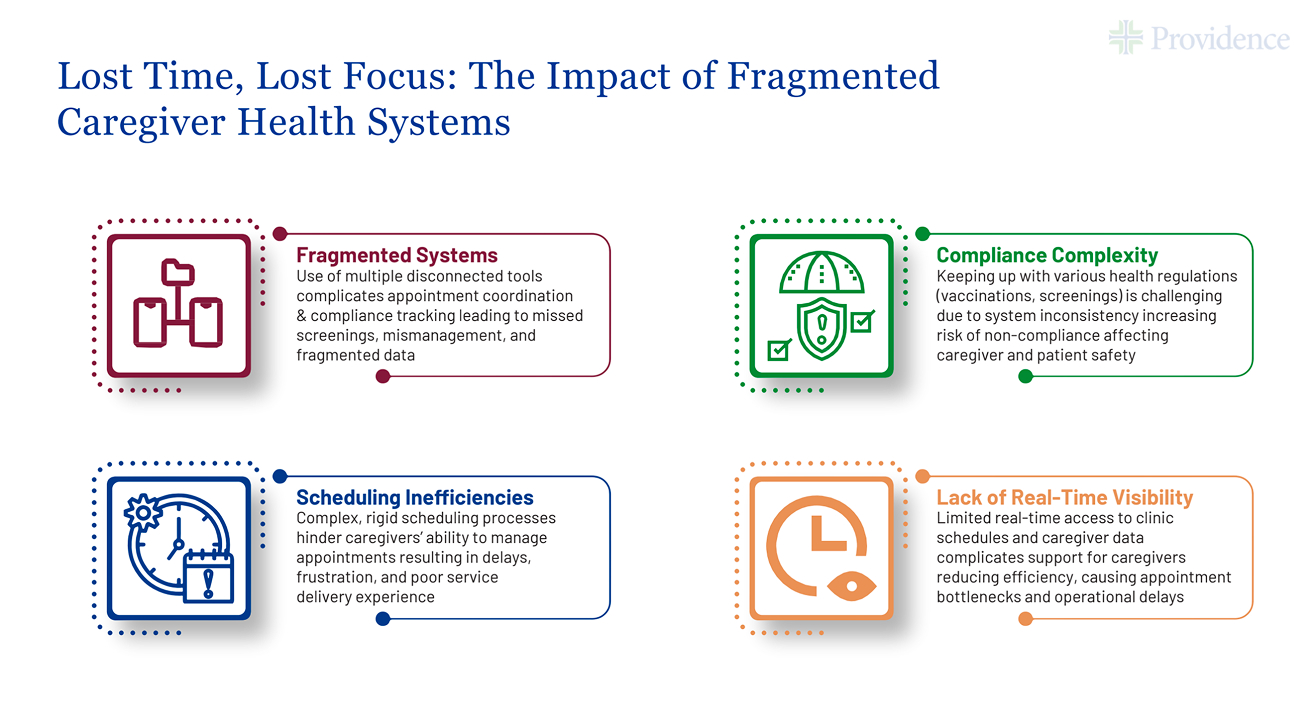
Managing caregiver health involves coordinating health screening appointments, managing compliance across various clinics and facilities, and providing real-time visibility into caregivers’ health status.
Factors compounding the complexity of managing caregiver health:
- Multiple Systems: The use of disparate systems makes it difficult to consolidate information and streamline health screenings. These tools do not always communicate with each other, causing mismanagement, missed appointments, safety hazards and fragmented compliance data. For example, if an employee’s health screening data (e.g., vision checks or fatigue levels) isn’t linked to the right systems, there’s a risk of that person operating heavy machinery without adequate health clearance, leading to safety hazards.
- Scheduling Inefficiencies: Caregivers and service representatives often face difficulties in scheduling or rescheduling health screening appointments due to time-consuming and rigid processes, with little flexibility in choosing convenient locations or accessing real-time clinic schedules. As a result, caregivers experience delays and long wait times, leading to frustration and inefficient service delivery.
- Compliance Challenges: Ensuring caregivers comply with necessary health regulations, whether it’s vaccinations, screenings, or exposure management, is another significant hurdle. With multiple systems in play and inconsistent processes, maintaining up-to-date compliance records is challenging, and poses the risk of non-compliance, putting both caregivers and patients at risk.
- Lack of Real-time Insights: Service Representatives face several challenges due to lack of visibility into clinic schedules and caregiver compliance data in real-time, including struggling to manage appointments efficiently or provide timely assistance to caregivers.
In addition to inefficiencies in caregiver health management, these challenges impact the overall satisfaction of caregivers themselves. Their time, that should be focused on providing care, is spent on administrative tasks. An efficient one-stop solution could give caregivers their time back and ease their way as they focus on delivering care.
From Complexity to Control: CHS Hub’s Impact on Caregiver Health and Compliance
At Providence, we devised a comprehensive, integrated solution Caregiver Health Services Hub, (CHS Hub) to address these challenges and streamline the entire caregiver health management process. A transformative solution, CHS Hub is designed to empower caregivers, streamline health screenings, and improve overall compliance, embodying our commitment to caring for those who care for us.
Here’s how CHS Hub addresses key challenges:
- System consolidation reduces complexity and enhances user experience: CHS Hub integrates several healthcare operations management systems into one cohesive platform, simplifying processes with enhanced workflows, improving communication, enhancing data sharing and eliminating the need for caregivers and service representatives to navigate between different systems.
- Improved and intuitive scheduling offers better flexibility: CHS Hub provides an intuitive scheduling system with real-time visibility, allowing caregivers and service representatives to book, schedule, reschedule, and manage their health screening appointments with ease, and choose convenient locations and timings. Notifications and reminders are automatically sent to caregivers, ensuring they stay on top of their appointments, reducing scheduling delays while improving caregiver satisfaction.
- Enhanced compliance with regular reminders: The platform is built to streamline compliance management with regular reminders for screenings and vaccinations. It provides caregivers with the necessary tools to proactively participate in their health and compliance management, and integrates compliance data, helping easily track which caregivers are up-to-date and who require follow-ups.
- Access to real-time data and insights eases clinic operations: Service representatives can access up-to-date information on appointment availability and caregiver compliance, enabling them to provide better support. This real-time visibility mitigates potential risks related to delayed screenings, non-compliance, and adverse health outcomes for caregivers.
The platform’s modular design, leveraging three reusable components – Candidate Service, Appointment Service, and Notification Service – streamlines processes across the board, reducing the time it takes to schedule and manage appointments. With 200+ clinic system admins, caregiver health nurses, and customer service representatives using the platform, CHS Hub is expected to manage health screening requests for more than 22,000 individuals annually. The platform is being rolled out across 46 clinics, empowering caregivers to manage their health screenings and compliance through self-help tools and reminder notifications.
Conclusion:
Supporting caregivers is essential to delivering high-quality care. The Caregiver Health Services Hub represents our commitment to innovation, efficiency, and enhanced caregiver experience. By addressing the challenges of fragmented systems, scheduling inefficiencies, and compliance management, is the platform sets a new standard for caregiver health management, allowing caregivers to focus on their core mission of providing exceptional patient care.