Opportunity for Change
Clinical and security leaders needed a quantitative, real-time way to focus scarce resources on the highest-impact risks across clinical apps and experiences.
Context
Dashboards took 6–9 months to build, application security reviews were slow, and fragmented data and standards made it hard to see which risks mattered most. The result was delayed decisions, operational friction, and misalignment between security work and clinical priorities.
Our Approach
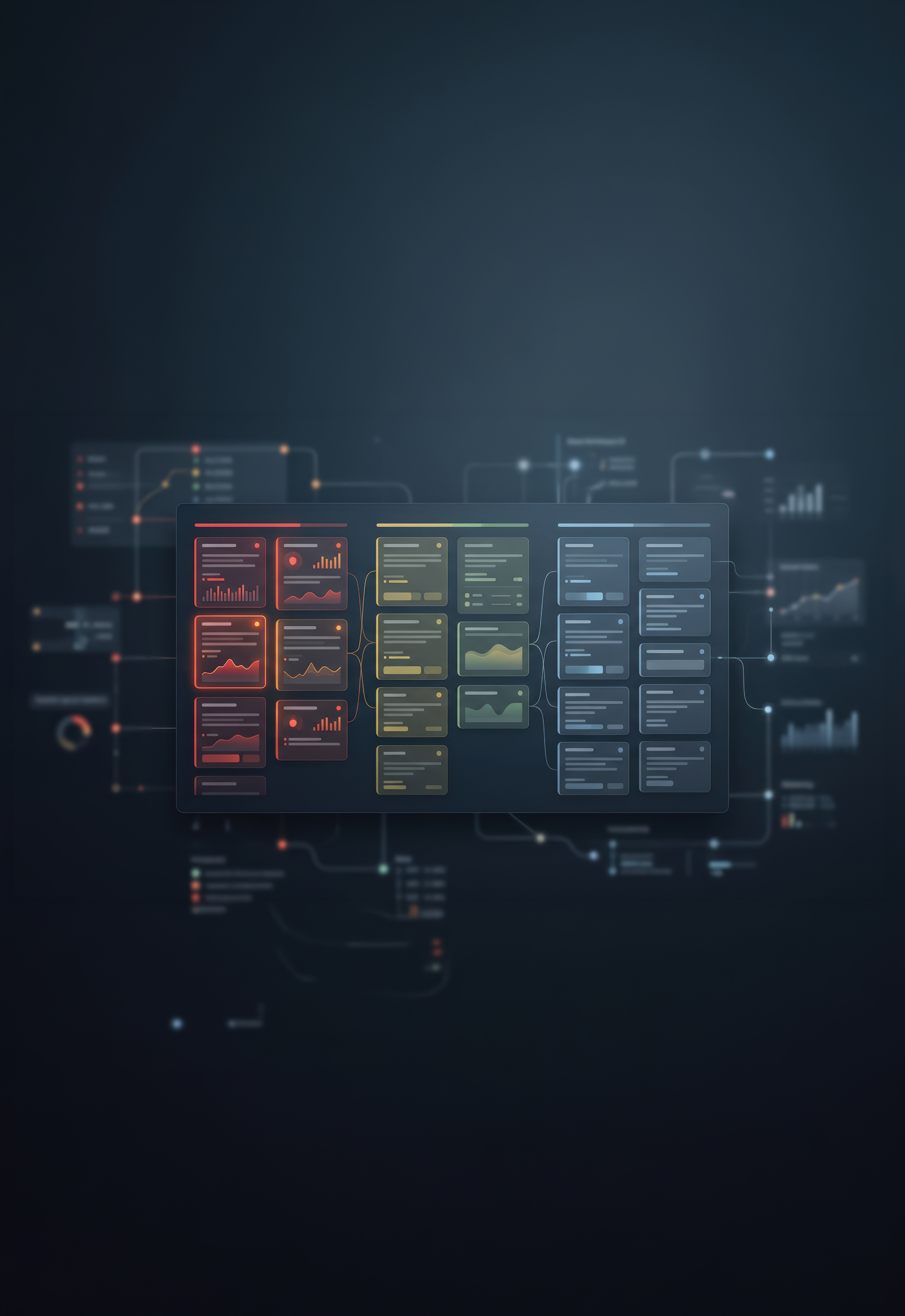
- Our risk priority number (RPN) dashboard quantifies and ranks risks, so the focus can be on what matters most.
- National Institute of Standards and Technology (NIST)-based Chief Information Security Officer (CISO) dashboard aligns cybersecurity metrics with business goals and executive oversight.
- A cyber knowledge graph integrates 50+ datasets, powering 6+ insight views across 120+ metrics for real-time visibility.
- AI-driven insights generated with less than 10% development effort; dashboards now built in less than a day for rapid reprioritization.
- Secure Design Patterns (e.g., Azure Open Integration) help healthcare staff address 20+ business scenarios; Cyber standards view offers single-click access to policies and standards.
- 3PSA and exception management dashboards flag risky vendors and unblock launches under control.
Transformative Outcomes
- Build time reduced from 6–9 months to less than one day
- Application security reviews completed ~ 65% faster
- Insights footprint expanded to more than six views and over 120 metrics
- Effort to generate insights reduced to <10% of typical development effort
- Scope covers 20+ business scenarios supported through secure patterns
- Governance aligned to the National Institute of Standards and Technology (NIST) with RPN–based risk scoring
Impact in practice
By turning scattered signals into a single, quantified picture of risk, staff and leaders can act faster on what matters, reduce operational friction, and protect uninterrupted, secure care, strengthening clinical resilience for every patient encounter.